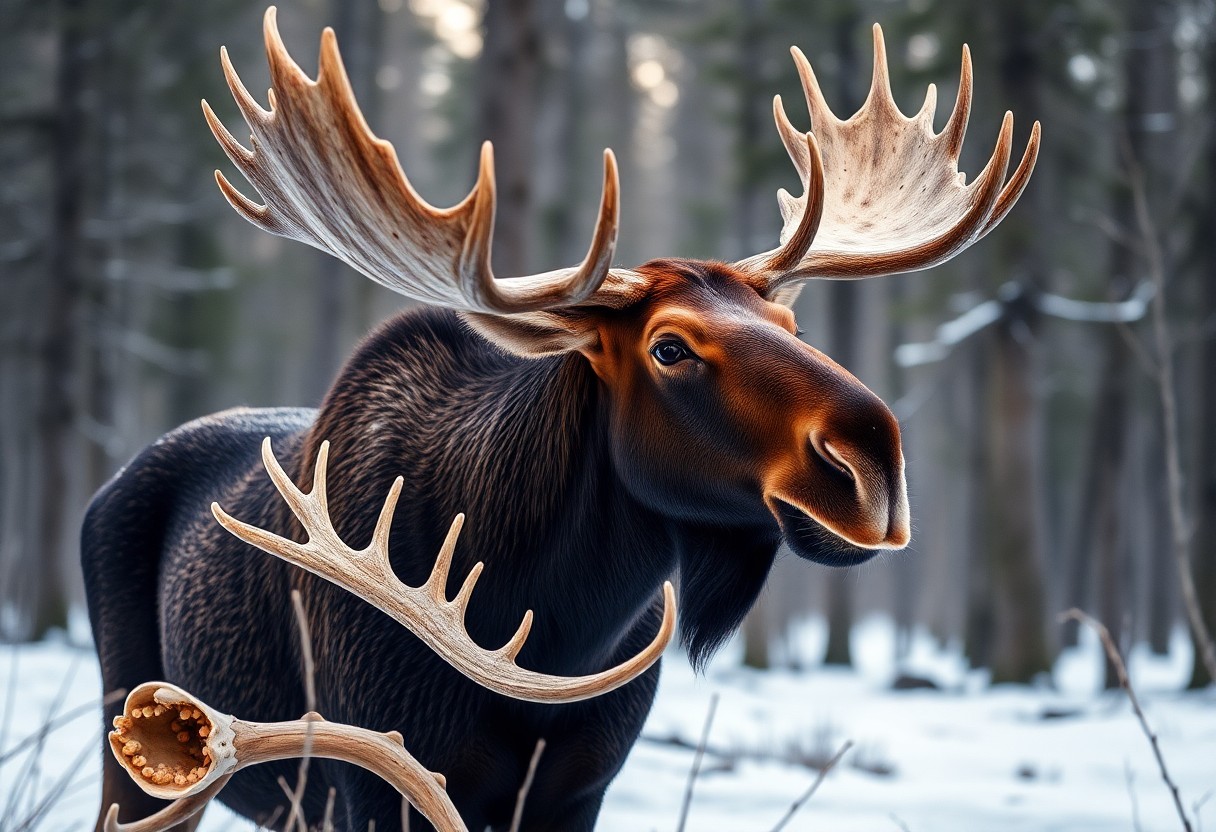
Over winter you can expect moose to shed antlers from late fall through spring; males drop theirs after the rut, so give bulls wide berth in autumn and search for valuable sheds in late winter.
Identifying Moose Antler Types and Characteristics
You can distinguish racks by observing beam thickness, palm width, and tine arrangement; moose antlers vary from broad, flat palms to narrow, pointed tines, which reflect age and genetics.
Look at velvet condition, base mass, and symmetry to identify shedding cues and probable function in displays or combat.
| Type | Palmated vs. Cervine |
| Shape | Broad palms vs. long tines |
| Size | Beam mass and spread indicate maturity |
| Surface | Velvet wear, scarring, and polish |
| Seasonal cues | Velvet drop precedes shedding |
- moose antlers
- palmated
- cervine
- yearling
- mature bull
Variations Between Palmated and Cervina Structures
Palmated forms present wide, flat surfaces that enhance visual display, while cervine structures emphasize long, pointed tines used in jousting and hooking; you should note edge wear and palm depth when identifying type.
Distinguishing Features of Yearling vs. Mature Bulls
Yearlings often carry thin beams with few points and minimal mass, giving you an immediate clue to age through small tine count and narrow spread.
Mature bulls display thick beams, expanded palms, and numerous tines, plus heavy mass and visible battle scars that signal dominance and experience you can use for accurate aging.
After comparing beam mass, palm spread, and tine count you can better estimate age and anticipate shedding patterns.
Primary Factors Governing the Shedding Timeline
- photoperiod
- testosterone
- climate
- nutrition
- age
- health
- genetics
Seasonally you’ll notice most casts cluster in late winter as changing photoperiod and dropping testosterone prompt antler loosening, which you can track by observing herd timing.
Age and health also shift schedules, so you may see yearlings and weakened individuals shed earlier while dominant bulls retain antlers longer.
The Role of Photoperiodism and Testosterone Levels
Photoperiod triggers endocrine shifts in bulls, so you should expect shorter daylight to coincide with falling testosterone and gradual antler detachment.
Testosterone decline varies with condition, meaning you will observe antler loss across weeks rather than a single date and should watch for signs of disease that accelerate casting.
Impact of Regional Climate and Nutritional Health
Climate extremes alter the timeline because severe cold or deep snow can deplete fat reserves and prompt earlier shedding that you can correlate with winter severity.
Nutrition quality governs recovery and regrowth, so you will find poor forage leads to lighter antlers and earlier casts in animals with malnutrition.
Any localized drought or late-season browse loss will accelerate shedding and signal population stress, so you should monitor body condition and adjust management accordingly.
The Biological Casting Process: A Step-by-Step Guide
You can use the table below to match visible signs and timing so you identify where a moose is in the casting cycle and estimate when shedding will occur.
| Stage | What you observe |
|---|---|
| Mineral resorption | Calcium pulled from the pedicle; antler feels less rigid and may wobble |
| Pedicle decalcification | Bone base becomes spongy; you notice increased antler movement |
| Separation | Soft tissue layer forms; moose rubs antlers more frequently |
| Detachment | Antler falls after rubbing or sudden force; brief bleeding can occur |
Decalcification of the Pedicle Bone
Pedicle bone activity pulls minerals back into the body so you see the base turn porous and weaker, which makes the antler less firmly attached and more prone to movement; watch for noticeable looseness as the key sign.
The Separation Phase and Physical Detachment
Separation begins when a thin layer of connective tissue replaces solid bone at the interface, and you will observe increased rubbing and impatience in the moose as the antler loosens; small tears may form before full detachment.
Physical actions like tree rubbing or sudden motion complete detachment, so you should monitor for heavy bleeding as a dangerous sign and expect rapid antler regrowth in the following weeks.
Pros and Cons of the Annual Shedding Cycle
| Pros | Cons |
|---|---|
| Lower winter energy expenditure | Less sexual signaling to attract mates |
| Improved mobility from lighter head weight | Weaker in male-male competition |
| Reduced risk of antler-related injury | Increased susceptibility to predators |
| Fresh antler regrowth for next rut | Short-term loss of weaponry for defense |
| Shedding aligns with seasonal forage cycles | Potential social displacement after rut |
| Lower visibility in dense cover | Timing can expose moose during harsh weather |
Benefits of Energy Conservation and Weight Reduction
You observe that shedding trims nonimperative mass, allowing moose to conserve fat and lower metabolic demands through winter when food is scarce.
Lighter antler load helps you note improved agility and lower heat loss, so weight reduction directly supports overwinter survival.
Vulnerability Risks During the Antlerless Period
During the antlerless months you should expect moose to rely more on cover and caution because they lack their primary defensive tools, raising predation risk.
Loss of antlers alters social dynamics you can witness, with younger or weakened bulls more likely to be displaced and become easier targets due to reduced defense.
Additional detail you must consider is timing: you will often see moose in thicker cover and behaving more skittishly shortly after shedding, so exercise caution if observing or working near them.
Professional Tips for Locating Shed Antlers
You will increase finds by focusing on travel corridors, riparian edges and willow thickets where moose drop antlers, and by studying fresh tracks, droppings and concentrated browse to pinpoint likely collection zones.
- Search willow and alder edges where shed antlers snag
- Follow fresh moose tracks to bedding and feeding areas
- Grid search after thaw with 50-100 m spacing
- Log GPS points and photograph condition before moving pieces
After you locate sheds, mark coordinates, pack retrieval gear and stay alert for aggressive moose and hidden hazards like deep snow; prioritize safety over recovery.
Scouting Preferred Wintering Habitats and Food Sources
Scout river bottoms, beaver ponds and willow corridors where moose concentrate; you should focus on edges and feeding flats because shed antlers often accumulate near favored browse, and use poles to probe drifted areas safely.
Optimal Timing and Ethical Collection Practices
Optimize searches in late winter to early spring when bulls drop most shed antlers; you must avoid disturbing cows with calves, follow local collection rules and retrieve items with minimal impact to vegetation and wildlife.
Check local regulations and private-land permissions before you collect, log every find with GPS and photos, and if a moose appears, retreat calmly-aggressive moose can be dangerous.
Final Words
As a reminder, you should expect bull moose to drop antlers from late fall into early spring, with most sheds occurring December through March. Age, health, and latitude shift timing, so you may find sheds earlier at lower latitudes or later at high latitudes. Use sheds to gauge local moose presence and seasonal behavior.