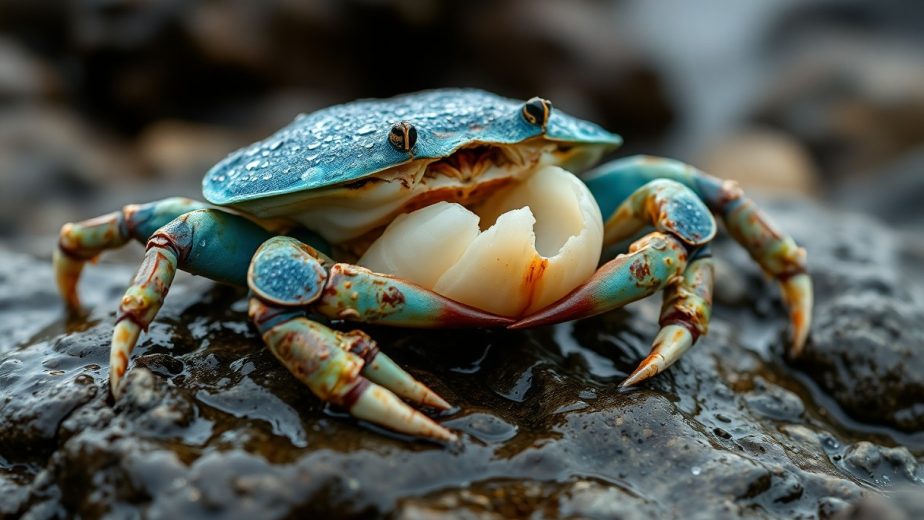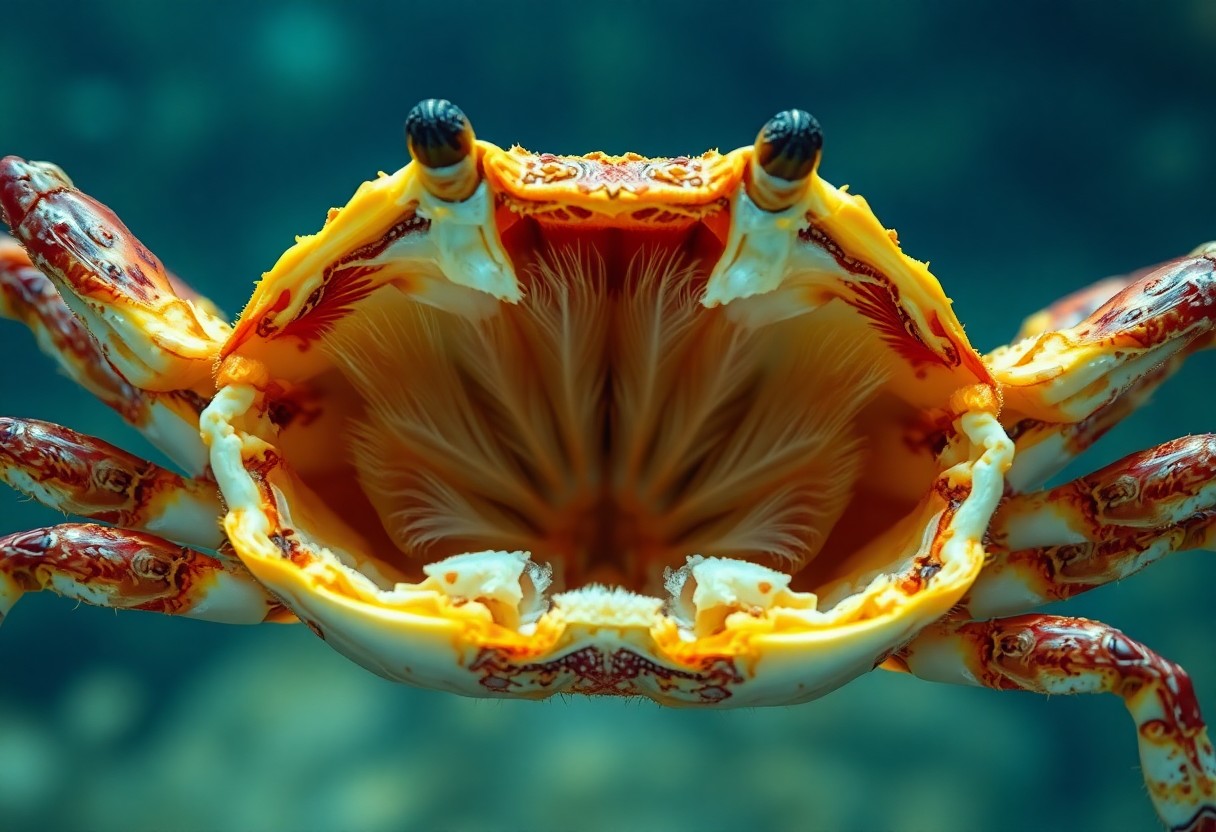
Over water you must know crustaceans extract oxygen through feathery gills, while some species use moist lung-like structures to breathe air; lack of water or damaged gills can cause fatal suffocation, so handling and habitat oxygenation matter.
Primary Types of Crustacean Respiratory Organs
Gills dominate the respiratory toolkit in aquatic crustaceans, where you depend on thin, vascularized filaments to extract oxygen from water. Water flow over gills is driven by limb beats or ambient currents, and oxygen is carried by hemolymph to tissues for metabolism and movement.
Some species modify body surfaces into air-capable structures when they venture ashore, shifting gas exchange to enclosed chambers or trachea-like systems. You will encounter branchiostegal lungs and pseudotracheae, which balance gas uptake with moisture control.
- Internal gills – protected, efficient in flowing water
- External gills – exposed, require active ventilation
- Branchiostegal lungs – sac-like, retain humidity for aerial breathing
- Pseudotracheae – cuticular channels that direct air to tissues
| Organ | Description |
|---|---|
| Internal gills | Located in branchial chambers; protected and efficient in currents |
| External gills | Exposed filaments; need constant ventilation to avoid hypoxia |
| Branchiostegal lungs | Sac-like chambers under carapace; conserve moisture for air exchange |
| Pseudotracheae | Trachea-like folds or channels that route air to tissues on land |
Internal and External Gills in Aquatic Species
Aquatic species use internal gills or external gills depending on microhabitat; you will see internal gills in fast-flowing zones and external gills in sheltered or low-oxygen waters. These structures maximize surface area and minimize diffusion distance so oxygen enters the hemolymph efficiently.
Branchiostegal Lungs and Pseudotracheae in Terrestrial Species
Branchiostegal lungs form under the carapace as sac-like chambers where you can maintain humid air for gas exchange; the vascularized lining transfers oxygen while reducing water loss. These organs permit limited terrestrial activity but raise susceptibility to desiccation.
Pseudotracheae are networks of fine channels or cuticular folds that deliver air directly to tissues; you observe them in species that require intermittent aerial breathing. Their design makes air respiration effective yet demands behavioral control of humidity.
Knowing the functional trade-offs among gills, branchiostegal lungs, and pseudotracheae lets you assess species’ vulnerability to low oxygen and drying, informing handling, habitat management, or conservation decisions.
Critical Factors Affecting Gas Exchange Efficiency
Environmental variables and anatomy interact to determine gas exchange efficiency; you must weigh temperature, dissolved oxygen, and morphological traits when judging respiratory performance.
- Temperature
- Dissolved oxygen
- Surface area
- Permeability
- Ventilation
Environmental Temperature and Dissolved Oxygen Levels
| Condition | Effect |
|---|---|
| Rising temperature | Reduces dissolved oxygen and increases metabolic demand (dangerous). |
| Low oxygen | Drives higher ventilation or forces activity reduction to avoid hypoxia. |
Rising water temperature lowers oxygen solubility and raises metabolic rate, so you often see increased ventilation or behavioral avoidance; prolonged low oxygen is dangerous to endurance.
Surface Area and Permeability of the Cuticle
Increased gill lamellae surface and a thin, permeable cuticle allow you to maximize diffusion, and species with expanded surfaces show positive gains in oxygen uptake and performance.
Cuticle composition and thickness regulate gas flux, so you may encounter calcified zones that reduce permeability and become limiting. Thou should assess morphological plasticity like lamellar expansion when predicting respiratory capacity.
Step-by-Step Process of the Respiratory Cycle
You can follow the respiratory cycle as the scaphognathite draws water through the branchial chamber, oxygen diffuses across gill lamellae into the hemolymph, and carbon dioxide exits with the exhalant flow; gill damage or poor flow sharply reduces efficiency.
Respiratory Cycle Steps
| Step | Action |
|---|---|
| Ventilation | Scaphognathite pumps water across gills to maintain flow. |
| Diffusion | Oxygen moves across thin epithelia into hemolymph. |
| Transport | Hemolymph carries oxygen bound to haemocyanin to tissues. |
| Excretion | Carbon dioxide diffuses out into the outgoing current. |
Ventilation and the Mechanical Role of the Scaphognathite
Scaphognathite motion produces the directed water flow you rely on for gas exchange, and changes in beat frequency alter ventilation rate. Muscular fatigue or obstruction reduces flow, so you see a direct drop in oxygen delivery when the scaphognathite is compromised.
Diffusion of Oxygen into the Hemolymph
Oxygen diffuses across very thin gill epithelia and then binds to respiratory pigments in the hemolymph so you receive transport to tissues; variations in gill surface area strongly affect uptake. Gill wear or fouling creates reduced diffusion and restricts aerobic capacity.
Hemolymph carries oxygen primarily bound to haemocyanin, allowing you to sustain activity, but shifts in temperature or pH lower binding affinity and can impair oxygen delivery.

Pros and Cons of Terrestrial vs. Aquatic Respiration
You can see that moving between water and air forces trade-offs in oxygen access, moisture control, and protective anatomy; air offers far more oxygen per volume, but you must cope with drying and structural changes to gills.
Comparisons show that aquatic breathing relies on constant moisture and efficient counter-current exchange, while terrestrial breathing demands behaviors and anatomical modifications that increase energy and exposure risks.
Pros and Cons: Terrestrial vs. Aquatic Respiration
| Terrestrial | Aquatic |
|---|---|
| Higher O₂ concentration in air | Stable moisture for gill function |
| Risk of desiccation | Lower O₂ per volume of water |
| Modified respiratory structures (pleopodal lungs) | Specialized gills with large surface area |
| Behavioral need for humidity control | Need for constant water flow over gills |
| Exposure to terrestrial predators | Hydrodynamic constraints on mobility |
| Lower viscosity eases air ventilation | Counter-current exchange boosts efficiency |
| Energy spent protecting moisture | Energy spent pumping or filtering water |
| Rapid oxygen uptake when moist | Performance drops in warm, hypoxic water |
High Oxygen Availability vs. Risk of Desiccation
Oxygen in air gives you access to higher metabolic potential, letting terrestrial crustaceans sustain bursts of activity when their respiratory surface is kept moist.
Exposure to air demands you manage the danger of drying out through shelters, nocturnal activity, or structural seals, and those defenses often limit time available for foraging.
Counter-Current Exchange Efficiency in Water
Water flowing opposite to blood or hemolymph maintains a steep gradient so you extract oxygen effectively; this mechanism lets gills achieve much higher extraction rates than simple diffusion.
Flow patterns and gill morphology mean you must generate or exploit currents, and failure to maintain flow rapidly reduces available oxygen and forces behavioral or physiological compensation.
Exchange performance falls when water is warm or polluted, so you need to monitor habitat conditions because low dissolved oxygen creates immediate stress and can sharply limit activity or survival.
Practical Tips for Optimizing Crustacean Respiration in Captivity
You should prioritize maintaining water quality and stable dissolved oxygen to support crustacean respiration; avoid high ammonia and low oxygen spikes that can quickly harm gill function.
- Monitor dissolved oxygen and temperature daily.
- Perform regular water changes to control ammonia and nitrates.
- Use gentle circulation to improve gas exchange without stressing benthic species.
- Maintain species-appropriate salinity and mineral levels.
- Avoid overcrowding to reduce oxygen demand.
Maintaining Water Quality and Flow Dynamics
Ensure your setup provides steady oxygen exchange by combining surface agitation, moderate flow, and targeted aeration so gills receive continuous dissolved oxygen; prolonged drops in oxygen are dangerous and can cause rapid respiratory distress.
Controlling Salinity and Mineral Concentrations
Keep salinity within the species’ preferred range and sustain adequate calcium and trace minerals to support molting and osmoregulation; abrupt changes or mineral depletion increase respiratory and exoskeletal problems.
Recognizing that abrupt salinity shifts provoke osmotic shock, you should adjust concentrations slowly, use blended or RO-mixed water to control ion balance, and test parameters frequently during changes to protect gills and overall respiration.
To wrap up
The gills of most crustaceans sit beneath the carapace and are ventilated by rhythmic limb movements; you observe oxygen diffusing across thin membranes into hemolymph while carbon dioxide exits.
You note terrestrial species keep moist gill chambers or develop internalized breathing structures so gas exchange continues on land, and their efficiency depends on water flow, surface area, and behavior.