This guide shows you how hippos defend territory: dominant males patrol banks, use loud bellows, charge and display powerful jaws and large canines, and groups protect young aggressively, so you must keep distance.
The Nature of Hippo Territoriality
Hippos defend stretches of water by scent, dung scattering and threatening displays; you will see the alpha use massive jaws and long tusks to intimidate rivals.
Rivers determine territory size, with bulls guarding the prime shallow pools that offer safety for females and calves, while grazing areas outside are less strictly held and you may observe more movement at night.
Defining the Alpha Bull’s River Domain
Alpha bulls maintain control by patrolling, driving off challengers and keeping a harem of females in the defended stretch; you must never approach a bull showing a wide yawn or charging because territorial fights can be fatal.
Behavioral Differences Between Land and Water
Within water you’ll see bulls enforce boundaries aggressively, marking with dung and using loud bellows, whereas on land hippos move more freely to graze and often tolerate nearby groups; you should still treat any hippo on land as dangerous if surprised.
Water fights involve chases, mouth grappling and powerful bites, and you may witness serious injuries as bulls protect access to submerged resting sites and breeding females.
Onshore encounters are often brief but unpredictable, because you will find hippos darting across paths after dusk and an encounter can trigger a fast, lethal charge, so keep clear of trails near rivers.

Primary Types of Defensive Displays
You see distinct display types: visual warnings, auditory signals, and forceful physical displays used to hold territory. Recognizing these cues lets you assess whether a hippo will escalate to a violent bite or a bluff.
- Visual warnings
- Wide-gape threat
- Auditory signals
- Sub-aquatic vocalizations
| Visual warnings | Wide gape, jaw clap, ear position |
| Auditory signals | Bellows, grunts, sub-aquatic calls |
| Charges | Mock charges, short lunges, full attack |
| Scent marking | Dung middens, boundary marking |
| Physical weapons | Massive jaw, long canines, high bite force |
Visual Warnings and the Wide-Gape Threat
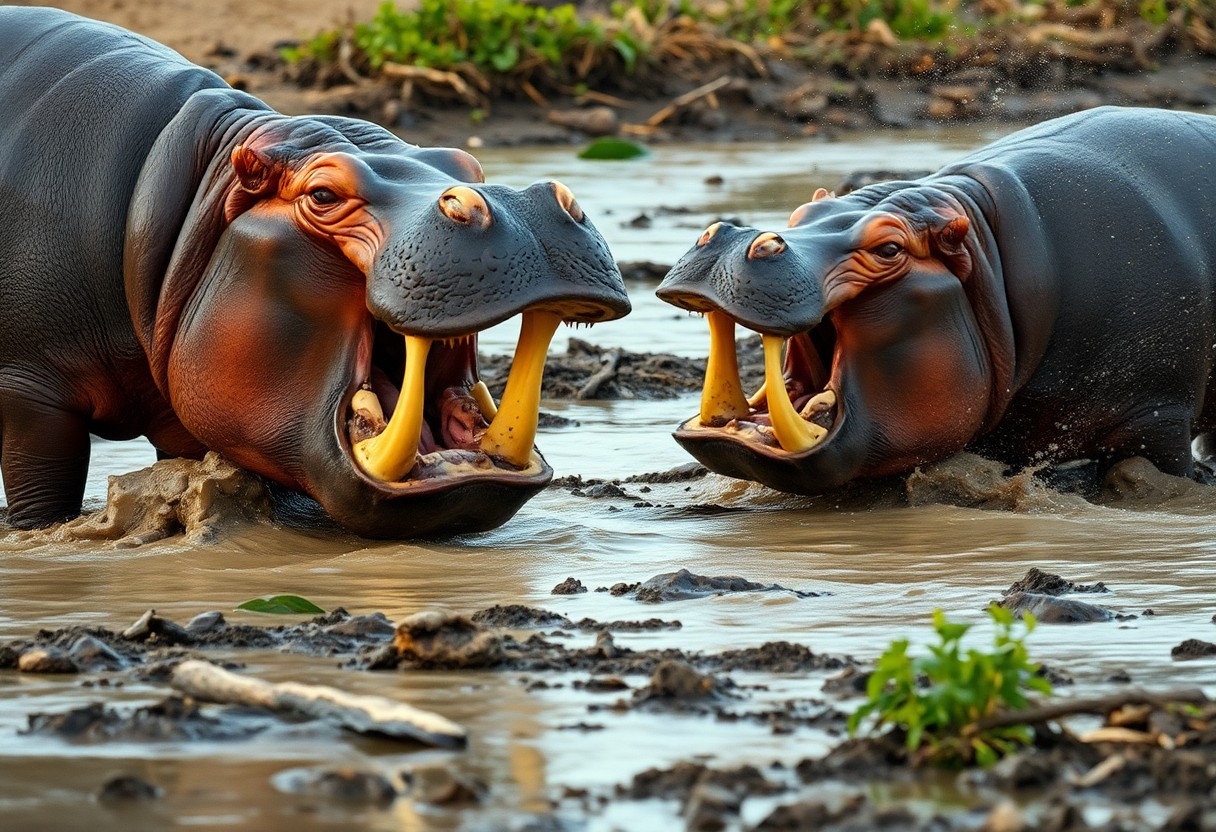
Wide-gape displays expose enormous canines and advertise the hippo’s jaw strength, so you should never get between a hippo and the water. Lateral head swings and rapid jaw claps often precede an actual charge, so treat a sustained gape as a serious warning.
Auditory Signals and Sub-aquatic Vocalizations
Listen for low, rolling underwater bellows that travel far; when you hear persistent calls, give the area a wide berth because a dominant male is signaling territory. Close-range grunts and honks often precede rapid escalation, so you should increase distance immediately.
Low-frequency sounds carry farther underwater than you might expect, so a distant bellow can mean a nearby male is preparing to defend turf and you should avoid approaching the bank. Monitoring call rhythm helps you judge whether the signal is a routine broadcast or an imminent attack.
Crucial Factors Influencing Territorial Aggression
When you observe hippo behavior, males use open-mouth displays, loud bellows and scent marks to warn intruders; you must watch for sudden charges and bites that turn displays into violent fights. Territorial boundaries are often defended in and out of water, and you should note how dominant bulls maintain control.
- Seasonal water levels
- Resource scarcity
- Population density
- Mating competition
- Male dominance
You will see aggression escalate with competition for mates and refuges; scent, vocalization and physical intimidation determine outcomes. The fiercest clashes occur when pools shrink and bulls must defend both females and the last deep water.
Seasonal Water Levels and Resource Scarcity
Seasonal drops in water force you to watch hippos compress into smaller pools, increasing contact and conflict; you will notice more frequent charges and longer chases. Water scarcity raises the chance of serious injuries as you monitor shrinking territories and contested drinking spots.
Population Density and Mating Competition
High local numbers make you witness repeated skirmishes as males jockey for dominance; you should track how overlapping groups spark more challenges and extra patrols by dominant bulls. Mating competition directly drives many confrontations.
The extra pressure you observe when too many males crowd prime pools leads to higher turnover of territorial bulls, more frequent wounds, and unpredictable incursions by roaming challengers, so you must expect elevated aggression under dense conditions.
How Do Hippos Defend Their Territory
This section outlines the typical escalation so you can spot shifting intensity: initial scent marks and bluff displays give way to loud vocalizations and mock charges before any contact occurs.
Behavior shifts rapidly when a challenger approaches; you will notice increased surfacing, bellowing and the distinctive dung showering that advertises presence and intent to rivals.
A Step-by-Step Escalation of a Territorial Dispute
| Step | What you observe |
|---|---|
| 1. Scent marking | Tail-tossed dung broadcasts presence |
| 2. Vocal and visual displays | Loud bellows, open-mouth yawns, bluff charges |
| 3. Close approaches | Circling, mutual sizing up, splashing |
| 4. Physical combat | Tusk strikes, biting, fights for water access |
Initial Signaling through Dung Showering
Early in encounters, you will see males spin their tails while ejecting feces to distribute scent; this broadcast reduces fighting by clearly marking territory and warning potential intruders.
Physical Engagement and the Use of Incisor Tusks
Physical clashes escalate when marking and displays fail; you should expect head-to-head charges, loud jaw snaps and the use of incisor tusks, which can cause severe injuries.
Close combat often targets limbs and flanks, and you must note that deep tusk wounds may become infected or be fatal, making these encounters among the most dangerous in hippo behavior.
Pros and Cons of Maintaining Dominance
| Pros | Cons |
|---|---|
| You secure exclusive breeding rights | High risk of fatal fights |
| You control prime wallowing and resting sites | Chronic injuries and scarring |
| Priority access to food near water | Continuous vigilance and stress |
| You can protect your young from rivals | Large energy expenditure |
| Displays deter many challengers | Frequent aggressive encounters |
| Higher standing within the pod | Susceptibility to infections from wounds |
| Ability to time breeding for advantage | Territory can be lost to stronger rivals |
Benefits of Exclusive Breeding Rights and Safety
You gain priority access to mates and calmer nursery areas, so your calves face fewer intrusions and enjoy higher survival odds when you hold territory.
Physical Toll and the Risk of Fatal Injury
Males who defend territories take and give deep tusk wounds that raise the risk of fatal injury, leaving you weakened and less competitive over time.
Repeated contests drain your energy, invite infection from puncture wounds, and can abruptly remove you from the breeding pool if a fight turns deadly.
Essential Tips for Safe Observation and Coexistence
When you observe hippos, stay on higher ground, remain in vehicles where possible, and avoid standing between animals and the water; mark known territory edges on your route.
- Warning signs: open-mouth gapes, loud honks, mock charges
- Buffer zones: maintain 30-50 m from the shoreline
- Night activity: avoid riverbanks after dusk
Perceiving open-mouth displays, repeated splashing toward shore, or sudden advances should prompt an immediate and calm retreat.
Identifying Warning Signs in Riparian Zones
Watch for fresh tracks, dung, bluffing charges, and sustained honking at dawn or dusk; you should withdraw steadily without running to avoid triggering a direct attack.
Maintaining Buffer Zones During Peak Activity
Keep observation points and vehicles well back from banks and ensure you never block an obvious escape path to water when hippos are nearby.
Increase distance during dry seasons and at night when hippos graze farther from water; you should use binoculars and fixed hides to reduce close approaches.
To wrap up
You see hippos defend territory through loud bellows, jaw-gaping displays, dung-marking and aggressive charges. Dominant males patrol banks and channels, use water positioning to isolate intruders, and deliver powerful bites to settle disputes. Group numbers and access to shallow water strengthen a male’s control, and ultimately they depend on intimidation, force and frequent boundary marking to keep rivals away.