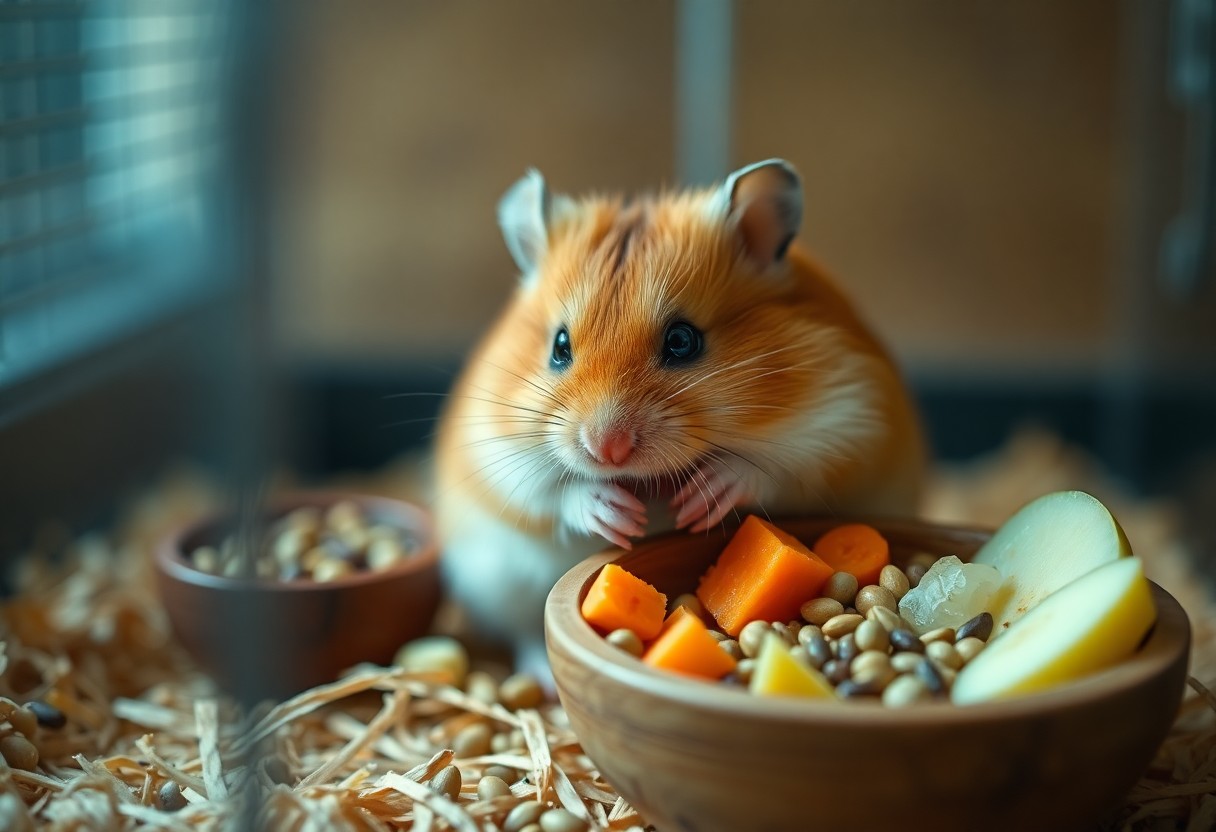
Many hamster owners ask what you should feed your pet; you should offer a balanced mix of quality pellets, fresh vegetables and occasional fruit, provide constant clean water, and avoid chocolate, onions, and sugary treats as they are dangerous.
Primary Types of Safe Hamster Foods
Seeds, pellets, and measured treats form the backbone of a balanced diet you provide, with small amounts of fresh vegetables and lean protein to round out nutrients.
- Pellets – balanced daily base
- Seeds – energy and variety (use sparingly)
- Vegetables – vitamins and fiber
- Protein – occasional cooked egg or mealworm
- Treats – limited, low-sugar options
| Pellets | Complete nutrition, look for named grains and added vitamins |
| Seed Mixes | Energy-rich; avoid mixes heavy in sunflower seeds |
| Fresh Veggies | Cucumber, carrot, spinach – wash and serve small pieces |
| Protein | Cooked egg, lean meat, or dried mealworms in moderation |
| Forbidden | Chocolate, onion, raw potato, avocado – keep away |
Mix types so you prevent selective eating and limit fat from too many sunflower seeds or sugary treats; keep clearly toxic items like chocolate, onion, and raw potato out of reach. This variety supports dental wear and steady energy.
Selecting High-Quality Commercial Pellets and Seeds
Check labels for a named pellet formula with whole grains and added vitamins, and avoid mixes dominated by high-fat sunflower seeds or sugary extras so you don’t unintentionally overfeed fat-laden items.
Incorporating Fresh Vegetables and Protein Sources
Offer small portions of safe vegetables like cucumber, carrot, and spinach, plus occasional lean protein such as cooked egg or dried mealworms to supply amino acids and variety.
Rotate servings and remove uneaten produce within a few hours to prevent spoilage and digestive upset; watch for soft stools or reduced appetite and reduce fresh portions if you see those signs.
Pros and Cons of Different Feeding Regimens
Compare feeding options by weighing convenience, nutrition, and long-term effects on behavior so you can pick a regimen that supports your hamster’s needs.
| Pros | Cons |
|---|---|
| Consistent nutrient profile | Can be more expensive |
| Reduces selective nibbling | May be less palatable to picky pets |
| Easy portion control | Requires measuring and schedule |
| Supports stable weight | Risk of overfeeding calorie-dense treats |
| Simplifies supplementation | Limited fresh-food variety |
| Predictable health monitoring | Some mixes promote selective eating |
Evaluating the Benefits of All-in-One Lab Blocks
Using lab blocks gives you complete balanced nutrition in each bite, which lowers the chance of deficiency and makes tracking intake straightforward; you will often see steadier coat condition and energy levels.
Analyzing the Risks of Selective Feeding in Seed Mixes
Selective mixes let hamsters pick fatty favorites, creating nutrient gaps and excess calories that can lead to obesity; you may not notice deficiencies until problems emerge.
Monitor seed content closely and limit sunflower seeds and other high-fat items, pairing small portions of mix with pellets and fresh veg so you can control calories and nutrients.
Step-by-Step Instructions for Dietary Transitions
One-Week Transition Summary
| Day | Action |
|---|---|
| 1-2 | Mix 25% new food with 75% current diet |
| 3-4 | Mix 50/50 and observe droppings |
| 5-6 | Mix 75% new; reduce old food |
| 7 | Offer 100% new if accepted |
Managing a Gradual One-Week Integration Phase
Begin the one-week plan by introducing small amounts: start with 25% new food, progress to 50% midweek, then 75% before offering 100% on day seven if accepted. Watch for firm droppings and a steady appetite as positive signs and stop the change if you see diarrhea or refusal to eat.
Monitoring Digestive Health and Food Acceptance
Observe daily droppings, activity, and weight; note soft or bloody stool, bloating, or lethargy as warning signs that require you to pause the transition and contact your vet. Positive indicators include firm droppings and normal grooming within 24-48 hours.
Check acceptance by offering the new item alone for short periods; if your hamster nibbles within 24 hours continue the plan, but if it refuses or loses weight over 48-72 hours revert to the previous diet and seek veterinary advice.
Expert Tips for Daily Feeding and Safety
Follow a consistent daily routine when you feed your hamster: offer measured pellets each morning, provide fresh water at all times, and give small, supervised treats. Remove uneaten perishable food after a few hours to prevent spoilage and pests, and limit sugary or fatty snacks to avoid obesity.
- Offer a balanced base of pellets and small amounts of fresh vegetables.
- Avoid seed-heavy mixes as the main diet; monitor portion control.
- Check the cage daily for uneaten food and clean to ensure safety.
Establishing Optimal Portion Sizes and Frequency
Balance daily rations to species: for most hamsters aim for about one to two tablespoons of pellets per day, with small vegetable portions two to three times weekly. Tailor frequency and portion based on age, weight, and activity; you should reduce pellets for less active or elderly pets.
Identifying Toxic Foods and Choking Hazards
Check ingredient lists and avoid common toxic foods such as chocolate, garlic, onion, citrus, and avocado; keep human treats well out of reach. Watch for choking hazards like whole grapes, large seeds, and sticky sweets; offer cut or softened options and supervise any novel treats.
After you suspect exposure to a toxic item or observe signs like weakness, drooling, vomiting, diarrhea, or sudden breathing difficulty from choking, contact an emergency veterinarian immediately, bring a sample of the offending food, keep your pet warm, and avoid home remedies.
Final Words
You should offer a balanced diet of commercial hamster pellets, fresh vegetables, occasional fruits, and small amounts of protein such as cooked egg or mealworms. Avoid sugary treats, citrus fruits, and toxic foods like chocolate, onion, and garlic. Provide fresh water daily, control portion sizes to prevent obesity, and consult a veterinarian for age- or species-specific guidance.