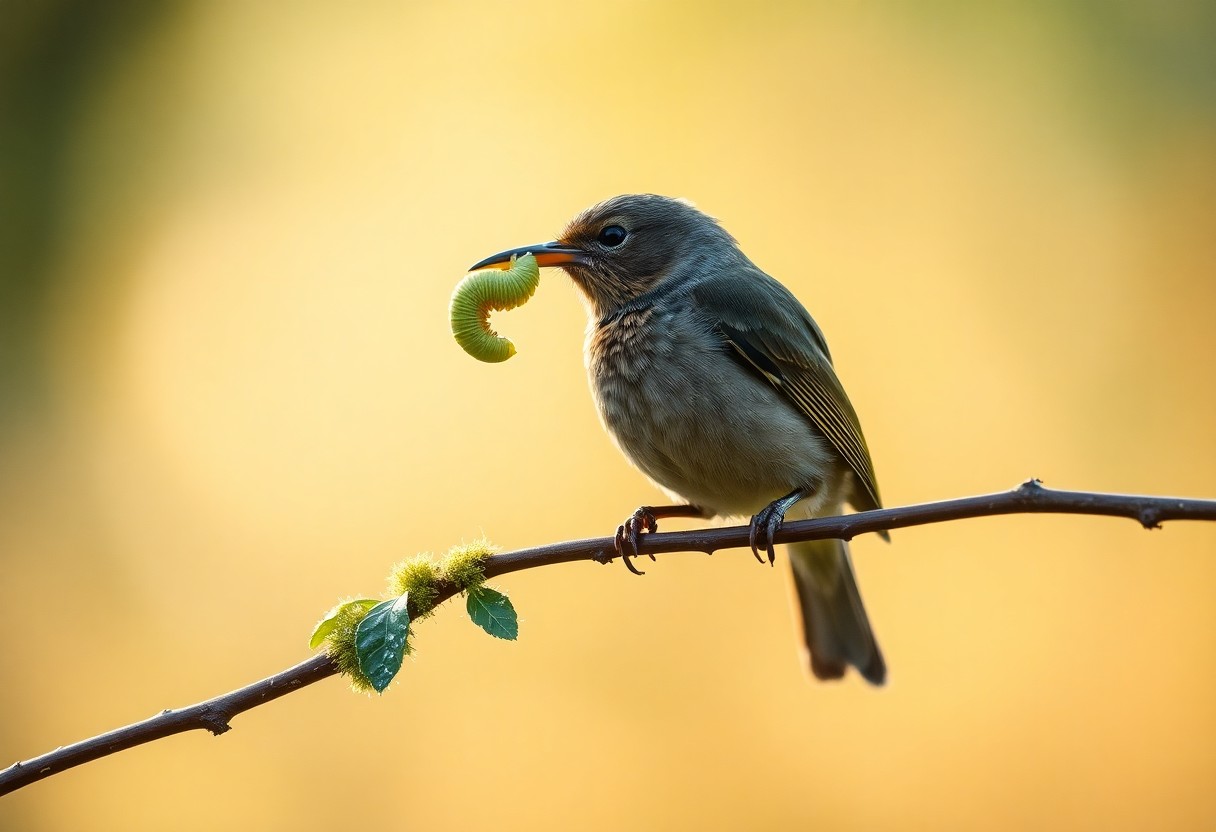
Most nightingales feed primarily on insects-caterpillars, beetles and flies-while they also take berries; you should watch for pesticide-contaminated prey as a dangerous risk and note their high-protein diet supports breeding and song.
Primary Types of Nightingale Nutrition
You observe nightingales feeding mainly on invertebrates and, seasonally, on soft fruits and berries, foraging low in dense cover and at ground level.
These food groups supply the protein-rich and energy needs for breeding and migration, and you will note that exposure to pesticides can render some prey dangerous to birds you study.
- Invertebrates
- Insects
- Earthworms
- Berries
- Fruits
| Invertebrates | Beetles, spiders, worms – primary prey |
| Caterpillars | High in protein during breeding |
| Flies & Midges | Forage at dusk and dawn |
| Earthworms | Rich protein after rain |
| Berries & Fruits | Provide sugars in late summer and autumn |
Invertebrates and Common Insects
Adults target beetles, caterpillars, flies and spiders; you can watch them pick prey from leaf litter and low shrubs, relying on invertebrates for nestling growth and adult maintenance.
Smaller prey such as midges and ants supply quick calories during feeding bouts, and you should be aware that contaminated insects may carry pesticide residues that harm nestling survival.
Seasonal Fruit and Berry Consumption
Ripe berries and soft fruits increase in the diet in late summer and autumn, and you will see nightingales switch to sugars to build fat for migration.
Often they favor elderberries, blackberries and small wild fruits that give fast calories, and you should note some fermented fruit can pose an intoxication risk if consumed in excess.
Perceiving seasonal shifts helps you predict when birds will move from protein-rich prey to sugar-rich fruits, so you can monitor fruiting patches to study stopover fueling and migration timing.
Key Factors Influencing Dietary Needs
Dietary shifts in nightingales reflect season, age and habitat: juveniles rely on protein-rich insects, adults take more berries and seeds when insect abundance falls. Habitat structure and prey diversity determine how much time you must allow for foraging and what foods are available.
- Seasonal availability – insect peaks vs fruiting periods
- Life stage – nestlings need high protein; adults need calories
- Habitat – hedgerows, scrub and leaf litter support prey
- Threats – pesticides and habitat loss reduce food quality
You will notice that local prey density, weather and human impacts change daily intake and prey choice for both migrants and residents. Fattening before flights and protein-rich feeding during nesting directly affect survival and reproductive success. Recognizing seasonal and local differences lets you tailor conservation actions and reduce exposure to pesticides.
Energy Requirements for Migration
Migration forces nightingales to build significant fat reserves, so you should expect intensified feeding on high-energy prey and ripe berries at stopovers. Insufficient energy stores or degraded stopover sites sharply increase mortality risk, especially when food is scarce or contaminated.
Nutritional Demands During Breeding Season
Breeding pushes dietary focus toward abundant, soft-bodied prey so you will see parents concentrate on caterpillars and other insects to feed nestlings. Rapid chick growth requires frequent feeding and high-quality prey to shorten nest exposure to predators.
Protein needs combine with elevated calcium and mineral demand for egg formation, so you should prioritize areas rich in diverse invertebrates and calcium sources like snail shells. Pesticide exposure can reduce prey availability and lower chick survival.
Supplemental actions you can take include maintaining hedgerows, leaving leaf litter, and avoiding chemical treatments to boost prey abundance; also consider small water features to attract insects and improve foraging success for adults and chicks.
Step-by-Step Guide to Providing Supplemental Food
Step Summary
| Step | Action / Tip |
|---|---|
| Choose bait | Offer live mealworms, crickets, earthworms from captive-bred sources; avoid pesticides and wild-caught prey. |
| Set station | Use small, shallow trays on bare ground, conceal with leaf litter, and reduce predator visibility. |
| Timing & portions | Provide tiny amounts at dusk or dawn to supplement natural foraging without dependency. |
| Hygiene | Remove leftovers nightly and clean dishes to prevent mold and rodents. |
Follow this concise sequence so you can supplement nightingales without replacing natural foraging: offer small portions at dusk, prioritize live baits, and remove uneaten food nightly to reduce disease risk. Use small, shallow trays on the ground and place stations away from roads and predators.
Selecting High-Protein Live Baits
Choose live mealworms, crickets, and earthworms because they provide high protein and natural movement that triggers feeding; source them captive-bred to limit exposure to pesticides and parasites. Offer prey in small batches so you do not attract larger predators or pests.
Creating an Accessible Ground-Feeding Station
Place a shallow dish or tray on bare ground, partly concealed by leaf litter or low vegetation so you give birds easy access while reducing visibility to predators; avoid salt, seasonings, and processed food. Provide several small portions rather than one large heap.
Ensure you remove leftovers nightly and clean the station frequently to prevent mold and rodents, and position the site where you can watch without disturbing birds; use temporary low barriers to deter cats and foxes.
Pros and Cons of Feeding Wild Nightingales
| Pros | Cons |
|---|---|
| Supplemental nutrition during scarcity | Risk of dependency |
| Improved chick survival | Increased disease transmission |
| Better opportunities for observation | Attracts predators |
| Supports local insect populations | Alters natural foraging |
| Helps during bad weather | Creates competition with other species |
| Citizen science contributions | Requires regular maintenance |
| Can boost breeding success | Artificially concentrates birds |
| Public education and engagement | Litter and pollution at feeding sites |
Advantages of Supporting Local Populations
You can raise local nightingale survival by offering appropriate foods like live insects and fruit during lean seasons, which supports nesting success and fledgling growth while you observe changes in population health.
Providing safe, plant-rich feeding areas encourages insects and shelter, so you enhance habitat quality and gain meaningful opportunities for monitoring and conservation-minded engagement.
Potential Risks of Human Intervention
Feeding poorly managed or inappropriate food can create dependency, concentrate birds and magnify disease spread; you must avoid bread and sugary scraps and keep feeders clean.
If you intervene without care, you may alter natural behaviors and disrupt local food webs, so keep offerings minimal, species-appropriate, and seasonal to reduce harm.
Essential Tips for Attracting Nightingales to Your Garden
You can attract nightingales by maintaining dense, low shrubs, leaf litter for foraging, and a pesticide-free feeding area that supports insects and shelter.
Provide quiet, undisturbed corners and thorny hedges for nesting, reduce artificial night lighting that deters song, and limit roaming cats while avoiding chemical pesticides that kill food sources.
- Plant native species that host caterpillars and beetles
- Install shallow basins of clean water for drinking and bathing
- Create leaf piles and low cover for safe nesting and protection from predators
Planting Native Species for Natural Foraging
Select a mix of native shrubs and understory perennials so you provide seasonal insects and berries; native species support more abundant prey and better foraging for adults and chicks.
Maintaining Clean Water Sources for Digestion
Offer shallow birdbaths, gentle drippers, or slow-flow features so you provide drinking and bathing sites that assist digestion and feather maintenance while reducing contamination.
Keep water changed every few days, place baths away from dense ambush spots used by predators, and use textured surfaces so nightingales can perch safely; stagnant water can breed mosquitoes and spread pathogens.
After you implement these measures, you should notice more frequent visits from nightingales as your garden becomes a safer, richer feeding and nesting site.
Specialized Diets for Rehabilitated Birds
During rehabilitation you should prioritize high-protein insects, soft fruits, and a moisture-rich softbill mix to rebuild condition. Avoid toxic foods such as avocado, chocolate, and caffeine, and prevent overfeeding high-fat seeds that can cause hepatic issues.
When transitioning to release, you should gradually replace hand-feeding formula with natural prey and live insects; maintain properly balanced formulas to prevent nutrient gaps. Watch for signs of malnutrition or overgrowth of fat stores that can impair flight.
Formulating Softbill Food Mixtures
Mixing your softbill recipe involves combining insect protein, mashed fruits, and a high-quality insectivore pellet with added moisture. Use high-protein insect meal and finely chopped mealworms; avoid whole hard seeds or chunks that pose choking hazards.
Aim to present the mixture at about body temperature and a smooth consistency so nestlings can swallow easily; discard moldy or reheated food to prevent bacterial infection.
Ensuring Vitamin and Mineral Balance
Calcium and phosphorus must be balanced to support bone strength; you should supplement with ground cuttlebone or a powdered calcium source and include vitamin D3 if birds lack sunlight, because imbalanced ratios can cause metabolic bone disease.
Provide a reputable avian multivitamin per manufacturer instructions to fill micronutrient gaps; avoid overdosing fat-soluble vitamins and log dosages so you can track changes.
Monitor plumage, posture, and appetite for deficiency signs and arrange bloodwork with an avian vet when you detect problems; untreated mineral deficits can cause weakness and fractures, so prompt correction is necessary.
Conclusion
Considering all points you should know that nightingales primarily eat insects-beetles, flies, caterpillars-and earthworms during the breeding season. You will also see them take berries and soft fruits in autumn and winter, foraging low in shrubs and on the ground. You can support them by maintaining mixed scrub and hedgerows that supply both invertebrate prey and fruit through the year.